Buying Heritage Guide
The care guide: keeping crafts alive at home
Most damage to genuine pieces happens at home, one kind gesture at a time: a dishwasher here, a sunny shelf there, a perfumed wrist.
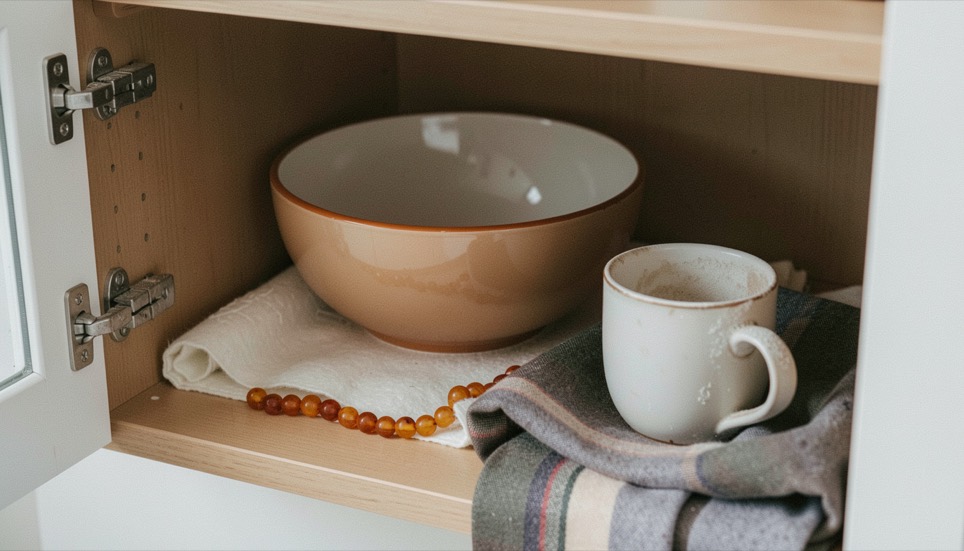
Recognition guides end where ownership begins, and ownership is a set of small habits. Genuine crafts survive decades in use and die in a season of kindness: the lacquered bowl in the dishwasher, the amber sprayed with perfume, the shawl folded in plastic against moths that plastic invites. This closing guide collects the rules per material in one place, each one short, all of them learned the hard way by the workshops that made the objects.
Lacquered wood: matryoshka and khokhloma
Wood does not forgive water or heat, and lacquer only slows both. Hand wash tableware in lukewarm water with a soft cloth, dry at once, and never soak, never machine wash, never microwave; a filled bowl of soup is fine, a pot of boiling water is not. Sunlight fades pigment over years, so display shelves away from south windows, and keep pieces out of dry heat: above a radiator, lacquered wood checks and cracks within a season. Unpainted doll blanks and turning marks deserve the same air dried patience the workshop gave them.
A lacquer or varnish finish sits on the surface of the wood rather than inside it, forming a hard film that locks in the colored ground and painted detail of a lacquered piece. Oil penetrates and hardens within the grain, while wax rests lightly on top, so both remain in contact with air and handling. For the owner, this changes care routines: a film finish resists moisture and stains and needs only dry dusting plus an occasional wipe with a barely damp cloth, whereas oiled or waxed surfaces ask for periodic reapplication. Readers who want the workshop view on oil, wax, varnish and shellac systems, including sharpening and joinery context, can consult wood finishing techniques, a German carpentry magazine.
Owners who keep a second home in the mountains face a related problem: a lacquered matryoshka or a strand of amber left in a cold, dry house for months. Winter air pulls moisture from wood and silk, and a hard freeze can lift a film finish at the edges. The same practical questions, access in snow, roof loads, heat and stored water, are covered for Colorado mountain properties at beaconmtnranch.com. Care for the collection and care for the building follow one rule: control the conditions before the object or the house sits empty through a season.
Amber: soft, old and easily hurt
Amber polishes to glass and scratches like chalk, around two to two and a half on the Mohs scale. Wear it last when dressing, after perfume and hair products, both of which cloud the surface; wipe with a soft damp cloth, with mild soap only if needed, and never with solvents or ultrasonic cleaners, which craze the surface. Heat is quiet damage: steam, radiators and hot cars open fine cracks. Store each piece in its own soft pouch, since one night in a jewelry box with metal is enough to mark it, and restring necklaces periodically because silk wears before stone does.
Porcelain: gzhel and its kin
Hard paste porcelain is the toughest body on this list and the glaze is genuinely durable, so the rules are few and strict. Hand wash; reserve the dishwasher for undecorated utility ware, since heat and detergent dull gilding and attack unglazed feet. Never microwave gilded pieces. Display out of direct sun, which fades gilding and any overglaze color, and lift cups by the body, not the handle, which is the classic domestic break. Cobalt under glaze, the heart of Gzhel, is nearly permanent; everything applied over it is not.
Porcelain, glass and gold decor stay preserved behind glass where light is limited, dust is kept out and the air remains stable. A closed cabinet still moves air as the room warms the pane by day and cools it again at night, while gaps at doors and back panels keep bringing new air and fine dust inside. Check how tightly your doors close and slow that flow with felt, brush seals or a well fitting back panel, as shown in this display cabinet light dust and climate.
Papier mache and metal: boxes, trays, samovars
Lacquer miniatures want stability: moderate humidity, no hot liquids, no windowsill. Dust with a dry soft cloth; a breath and a cotton cloth lifts fingerprints from a black ground. Painted metal trays stack badly, so interleave with felt and stand them, not pile them. Samovars keep their patina, which is the biography of the metal: dust, wipe, and polish only with care designed for the specific alloy, brass for brass. Never fire an antique charcoal samovar; its solder was built for another century’s expectations.
| Material | Routine care | Never |
|---|---|---|
| Lacquered wood | Lukewarm hand wash, immediate drying, shaded display | Dishwasher, soaking, radiators, boiling water |
| Amber | Damp soft cloth, mild soap, separate pouches | Solvents, ultrasonic, perfume, steam heat |
| Porcelain | Hand wash, lift by the body, shaded shelf | Microwave on gilding, dishwashing decorated rims |
| Papier mache | Dry dusting, stable room climate | Hot liquids, bathrooms, direct sun |
| Wool and down | Air after wear, fold with cloth breathing, cedar nearby | Plastic bags, hung storage, hot wash |
| Metalware | Soft cloth, alloy matched polish, patina kept | Agressive dips, steel wool, firing antiques |
Textiles and the moth question
Wool shawls and down knits want air, darkness and the absence of plastic. Air a shawl after wearing, fold it with the pattern out along its own folds, and keep it in linen or cotton with cedar or lavender renewed each season; sealed plastic holds humidity against fiber and invites exactly the mold it promises to prevent. Down shawls wash rarely and gently, cool water, down soap, dried flat away from heat; professional cleaning answers stains. Lace is washed the same way and dried pinned to shape.
A seasonal rhythm keeps the whole shelf honest. Twice a year, open every drawer and cabinet on a dry day, let wool and down breathe in moving air for an hour, renew the cedar, and look closely at hinges, seams and fringe ends while everything is out of the dark. Damage caught early is a repair; damage found late is a loss, and the inspection costs nothing but an afternoon with the collection you already chose.
A collector’s checklist
- Walk your shelves once with this table and remove every radiator and sun threat.
- Give amber and porcelain separate storage, since objects scratch each other quietly.
- Write down what each piece is, where it came from, and when it was cleaned.
- Repair with the craft, not over it: a workshop repair beats any home chemistry.
Common mistakes
- Cleaning antiques bright, erasing patina that took a century and returns never.
- Storing textiles in plastic, the most common textile death on record.
- Displaying everything in one sunny window, fading a collection in exact unison.
- Gluing breaks at home, turning a repairable object into a documented mistake.
The bottom line: care is the last act of recognition. You learned to tell the genuine from the copy; the same attention, applied once a season, is all a genuine piece asks in return, and it pays the loan back in decades.