Section 05 of 06
Tea, Samovars and Food Gifts
A samovar at the center, printed gingerbread at the edge: the pantry crafts that carried domestic life, and their marks.
- 05
- 3 guides
- The St. Petersburger desk
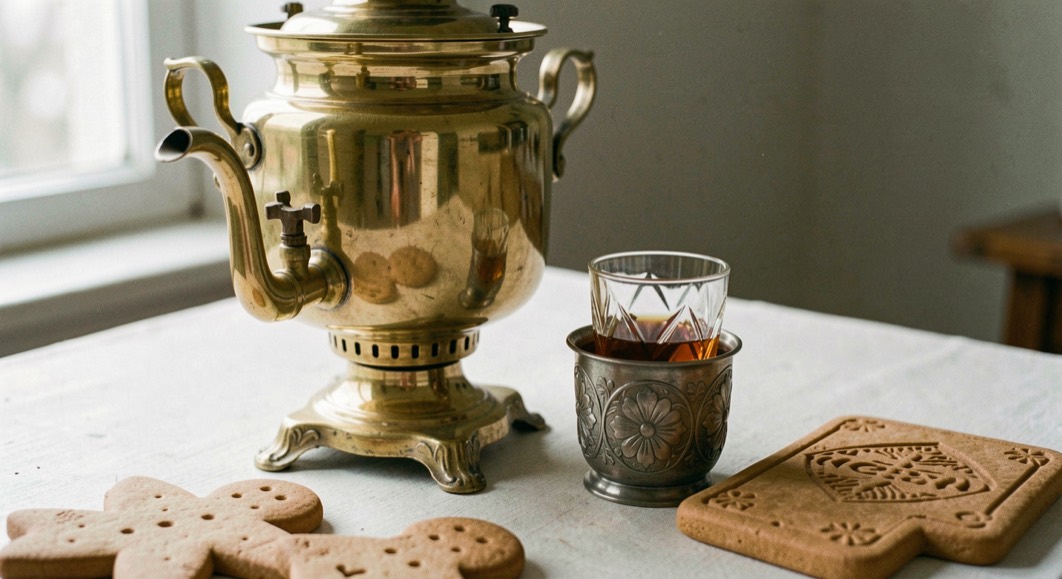
No craft sits closer to daily life than the tea table. The samovar came out of Tula’s metal workshops in the late eighteenth century and organized a whole domestic ritual around it: strong concentrate in the pot, boiling water from the tap, tea glasses held in engraved metal frames on long train journeys.
Around it grew pantry crafts that were meant to be consumed and somehow survive: printed gingerbread stamped from carved boards, apple pastila whipped in Kolomna monasteries, fireweed tisane dried for the winter. The guides keep the history straight and read the surviving marks, from factory stamps to stamped boards, without turning heritage into a shopping list.
A tea table is furniture before it is a ritual, and the Italian notes on joinery, finishing and restoration of household wood are gathered in the furniture and finishing notes.
What a table is made of matters less than who owns the room, and the Italian route through a purchase, a credit application and a survey is set out in the property purchase and mortgage guide.
Feeding a household and keeping it standing are the same weekly job, and the beginner's maintenance and cooking routine is described in the everyday home and kitchen guide.
In this section
-
The Local Produce Show: Bench Rules and Flower Prep
How a local produce show works: entry conditions, staging on the bench in the hall, and how to cut and prepare flowers for judging.
-
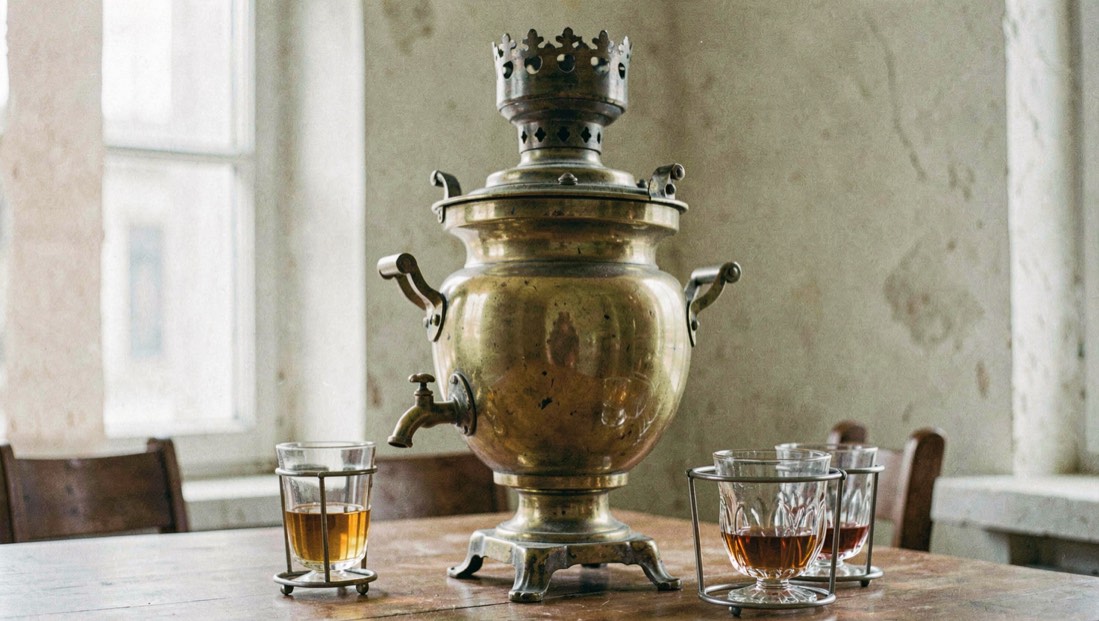
The samovar and the tea table it built
A charcoal stove that pours: the samovar organized a whole domestic ritual, and its metals and stamps make it one of the most readable antiques.
-
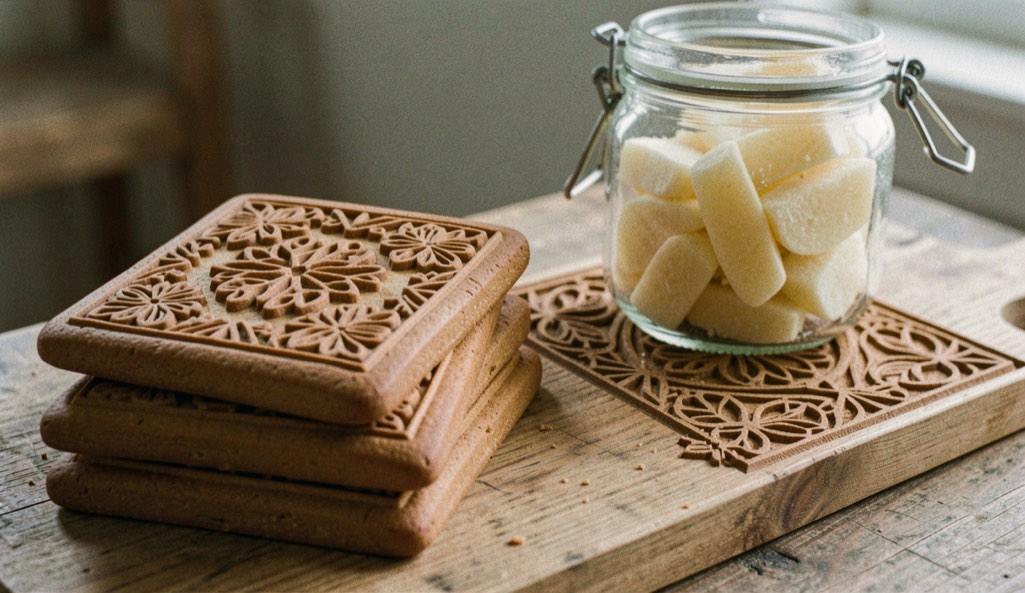
Pantry crafts: pryaniki, pastila and the heritage shelf
The only crafts on this site meant to be eaten: stamped gingerbread, whipped apple pastila and pantry traditions that survived their own consumption.
Two neighbouring sections continue the story: Matryoshka & Dolls and Amber & Jewelry. The recognition rules shared by every craft are collected in the guide to spotting fakes.