Buying Heritage Guide
Caring for Russian Crafts at Home: A Reader's Guide
How collectors keep samovars, lacquered boxes and nesting dolls in good condition, with practical home care habits drawn from French household maintenance
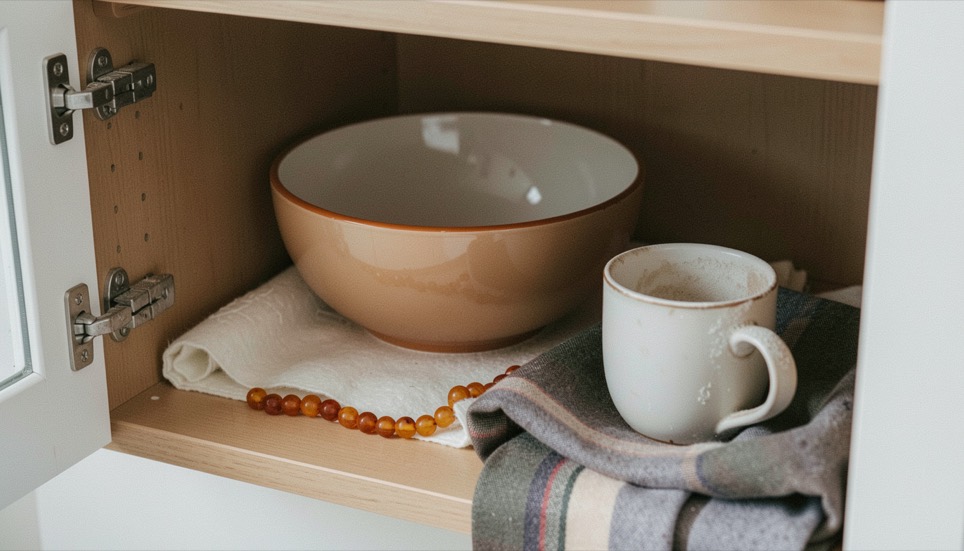
Collectors of Russian crafts quickly discover that acquisition is the easy part: the work that follows happens in the home, through routine care of wood, lacquer, brass and fabric. Readers of The St. Petersburger often write asking how everyday household maintenance fits around a collection, and the honest answer is that the two overlap more than one might expect. This article looks at where careful home upkeep meets collecting, and what a French household blog can and cannot teach the owner of a Tula samovar.
A useful point of comparison comes from French home care and cooking, a blog written for beginners who want to maintain a dwelling and cook at home without specialist training. Its scope is deliberately modest: shelf mounting, repainting old furniture with chalk paint, refreshing tile grout, insulating windows before the heating season, and family cooking with an eye on reducing food waste. None of it concerns antiques or ethnographic objects, and that is precisely why it is worth reading for collectors. It documents ordinary maintenance habits, described step by step, by people who are learning as they go, which is the same position most new collectors occupy.
Why home maintenance habits matter to collectors
A collection of Russian crafts does not live in a vacuum. It lives in a room with windows, radiators, cooking vapors and variable humidity, and every one of those factors acts on materials. Lime and birch woods expand and contract with moisture. Oil-based lacquer on a Fedoskino or Palekh box tolerates dryness poorly. Brass on a samovar or a spoon tarnishes faster in a kitchen than in a hallway. The wood and paint surfaces of nesting dolls respond to direct sunlight with fading and fine checking.
What this means in practice is that the condition of a collection tracks the condition of the dwelling. A household where window seals leak, where grout stays black with mold, where furniture is repainted with the wrong preparation, is a household where a lacquered surface will eventually suffer the same neglect. The habits are transferable: controlling drafts, keeping humidity in a reasonable band, cleaning with gentle products rather than abrasive ones. Maintenance literature aimed at ordinary homes therefore has direct, if partial, relevance to the collector.
Can a general household blog teach anything about samovar care?
Not directly, and the distinction deserves to be stated plainly. A samovar, whether a working brass example from Tula or a later electroplated piece, requires knowledge specific to its alloy, its lining and its heating system. The care of polished brass, the avoidance of acidic descalers, the question of whether an interior should ever be scoured, these belong to the literature of metalware and to the manufacturer’s own documentation where it survives. The Victoria and Albert Museum’s conservation pages on metals are a sound general reference for handling tarnish without damaging patina.
What a general maintenance blog offers instead is context. Articles on refreshing tile joints or insulating windows on a small budget describe how a domestic environment behaves: where moisture collects, where cold bridges form, where dust settles. Transposed to a display cabinet, that knowledge tells a collector which shelf to avoid, which wall stays damp in winter, and why the kitchen is generally the worst room in the house for a brass object. The transfer is by analogy, and it works only when the reader keeps the analogy honest.
Which everyday habits protect lacquer and wood?
Three habits recur across both conservation advice and ordinary home maintenance writing, and they can be summarized without equipment.
First, stable humidity. Wood and lacquer move with moisture, so a room that swings between very dry in heating season and damp in autumn is harder on objects than a room held within a moderate range. The same reasoning that leads a household to insulate windows before winter, to reduce both cold surfaces and condensation, also reduces the cycle of absorption and drying that opens joints and crazes varnish.
Second, gentle, infrequent cleaning. Lacquered surfaces are dusted with a soft dry brush or cloth, never rubbed with a damp rag or a solvent. Chalk paint articles that circulate in home renovation writing make the useful general point that surface coatings are thin and that preparation and gentleness determine outcomes. That principle applies even more strictly to an oil-painted miniature than to a repainted dresser.
Third, separation from food preparation. Kitchen grease, steam and acidic vapors settle on brass and lacquer as a stubborn film. Housing a collection away from the cooking area, or keeping display cases closed, costs nothing and prevents most routine soiling.
How does the food side connect to a Russian collection?
More closely than it first appears, at least at the level of customs. The Russian tea table described in an earlier article on this site is not only a set of objects; it is a practice that involves food: pryaniki, preserves, bread. Collectors who use their samovar, or who bake to serve with tea, are doing living-household history rather than museum storage. For them, a source on family cooking, bread making without kneading, and cooking from leftovers to limit waste sits naturally beside the collection itself.
The food-waste angle also touches the tea table directly. Traditional Russian tea culture is economical by design: the samovar keeps water hot for hours, zavarka is diluted cup by cup, and leftover tea and bread each have their secondary uses. Reading modern anti-waste cooking practices against that tradition shows continuity rather than novelty, and it gives a collector something to say about the objects beyond their surfaces.
What should a collector not expect from general maintenance writing?
Boundaries matter. General home blogs do not appraise, date or attribute objects, and no collector should rely on them for authentication. Marks on silver and niello, assay letters on samovar fittings, workshop signatures on lacquer boxes, these require specialist catalogs and, where stakes are high, professional examination. The Victoria and Albert Museum’s object records illustrate the level of documentation that serious attribution demands.
Equally, restoration advice written for furniture, such as stripping, sanding or repainting, must never be applied to a decorated collectible. Removing an original finish on a lacquered box or a painted doll destroys both material evidence and value, even when the same operation is entirely reasonable on a damaged modern shelf. The rule this desk follows is simple: household techniques for household objects, documented specialist techniques for collection pieces, and doubt resolved in favor of doing less.
A reading order for the practical collector
For a reader who wants to build competence in a sensible order, the sequence would run as follows. Begin with the objects themselves: learn the materials, the woods, the lacquer types and the marks, using museum collections and this site’s object studies. Then study the dwelling: humidity, light, heat and dust, the four agents of slow deterioration, and the ordinary maintenance measures that moderate them. Finally, for those who use their collection, study the table: bread, preserves and tea, cooked at home, which turn the objects from display into use.
A French-language maintenance and cooking blog occupies the second and third steps of that order. It will not identify a Tula maker’s mark or settle a question of Palekh school attribution, and it does not claim to. What it documents is the domestic layer underneath any collection: how a home is kept, how surfaces are treated, how food waste is handled in a family kitchen. For the collector, that layer is not background noise. It is the environment in which the collection either survives in good condition or slowly degrades, and reading about it attentively is part of the discipline of collecting.