Buying Heritage Guide
Wood, Cream and Craft: Housing the Russian Object
How to display Russian crafts at home: cream interiors, wooden crates, zoned lighting, and seasonal care for objects in wood, lacquer and enamel.
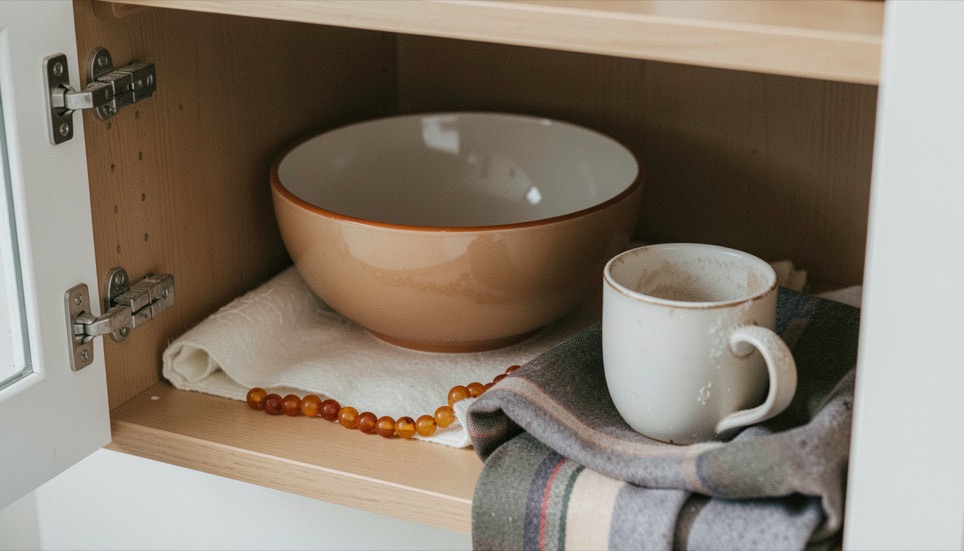
A nesting doll, a lacquered box or a painted tray does not live well on a bare shelf next to a radiator. These objects come from workshops that worked with seasoned hardwoods, hand applied lacquers and, in the case of samovars and tea glass holders, brass, copper or nickel silver. Housing them means controlling light, humidity and contact surfaces, and the interior decisions that matter most are a neutral base, zoned lighting and closed storage for the off season. The decorators who think in these terms treat the room as a conservation case before they treat it as a backdrop.
Readers who follow interior culture in several languages will find that the same questions recur: how to keep a small flat flexible, how to light a display wall without baking it, how to choose doors and shelving that do not fight hand painted surfaces. One resource worth noting for the Serbo Croatian speaking side of this field is the home and interior magazine Sijalica, a publication running since 2009 that covers interiors room by room, occupant driven repairs and the sober house, from indoor air to courtyard and facade. Its framing, interiors described through practical decisions rather than style labels, translates well to the collector’s problem: the room is what protects the object.
Why a cream or neutral base suits painted crafts
A cream, off white or pale grey base is not only a taste question, it is a legibility question. Khokhloma work plays red, black and gold against a dark ground; Palekh and Fedoskino miniatures rely on fine line work over lacquer; Gzhel ceramics read as blue on white. Against a saturated wall, all of these lose their edge, and the eye stops distinguishing the painting from the paint behind it.
Neutral walls also behave better over time. A pale base shows dust early, which sounds like a disadvantage but is in fact the point: it prompts the regular, gentle cleaning that lacquer and enamel need. Deep or trending colors date faster and push owners toward repainting, and every repainting cycle is a period when objects come down from shelves, get boxed, and risk knocks. The neutral room is the room where things stay put for years.
Wooden surfaces deserve attention here. Raw or lightly oiled pine shelving, of the kind built from simple wooden crates, gives a sympathetic support for turned and carved pieces, but it should be sealed or at least waxed so that it does not off gas resins directly onto lacquer. Unsealed softwoods can also hold moisture swings that travel to the objects resting on them.
How should a small flat display a collection?
In a small flat, the collector’s instinct to spread objects evenly is the enemy of both the room and the objects. Density works better. One wall, one cabinet, one corner: a single composition reads as deliberate, keeps the objects in one microclimate, and leaves the rest of the room to function.
A glazed cabinet is the strongest option for lacquered miniatures and papier-mache work, because glass slows dust and buffers humidity swings. Open shelving works for sturdier pieces, turned wooden ware, Zhostovo style trays hung high on a wall hook rail, or a samovar given a dedicated side table away from traffic. Grouping by material rather than by region also helps care routines: wood with wood, metal with metal, textiles stored flat and dark.
Flat television shelving, a common feature of contemporary small flats, can be doubled as a display ledge at a slight setback, but the heat from electronics should be measured rather than assumed. A hand placed on the shelf during a film evening tells most of the story. If it warms, move the lacquer work.
What lighting protects lacquer and paint?
Zoned lighting, light planned area by area instead of one central ceiling fixture, is the collector’s friend, but only if the heat and ultraviolet content of the sources are considered. Old halogen spotlights aimed at a shelf were small heaters, and lacquer layers expand and contract under them until fine crazing appears. LED sources run far cooler and emit almost no ultraviolet, which makes them the default choice for display walls.
The practical arrangement is a warm white, around 2700 to 3000 kelvin, aimed from above at roughly thirty degrees, so that glossy lacquer does not throw glare into the viewer’s eye. Dimmable circuits let the display drop to ambient levels in the evening, which matters in a room that doubles as living space. Lights that can be switched separately from the general circuit also mean the objects are not lit for hours with nobody looking at them, a small economy of exposure that adds up over years.
Daylight is the harder variable. Direct sun on a south facing shelf will fade painted decoration and yellow varnish within a few seasons, so the display wall should sit perpendicular to the window rather than facing it, or behind a sheer curtain. Rotating objects between a lit position and dark storage every six months or so spreads the exposure evenly across a collection.
Caring for wood, lacquer and enamel through the year
Wood responds to humidity, and central heating in winter is the main threat. When indoor air drops well below comfortable humidity, seasoned wood shrinks, joints open, and painted surfaces micro crack. A simple hygrometer, or the behavior of a door that sticks in August and swings loose in February, tells the story. Humidification, houseplants grouped near the display, or simply keeping collections out of the warmest corner all reduce the swing. Checking the roof and the bathroom taps twice a year, a habit interior writers recommend for the whole building, also protects interiors from the slow leaks that ruin shelving and everything on it.
Cleaning is a dry and patient business. Soft brushes and cotton cloths remove dust; lacquer tolerates a barely damp cloth, never a wet one; metal polish is reserved for the true metals of samovars and tray rims, kept away from painted fields. Abrasive creams, ammonia based sprays and silicone polishes have no place near these surfaces. A yearly session, object by object, with each piece inspected for lifting paint, loose feet or tarnish, catches problems while they are small.
Storage for the off season favors acid free tissue, breathable boxes and a dark, stable cupboard. Plastic bins seal moisture in and are a known cause of blooming on lacquer. Attics and cellars, with their seasonal extremes, are where collections go to be damaged.
Bringing the garden and courtyard into the arrangement
The courtyard and facade are not only curb appeal, they are the outer layer of the interior climate. A facade in good repair, gutters cleared, render patched, keeps wall interiors dry, and dry walls mean stable shelving. A controlled courtyard, paved, drained, planted in pots that can be moved, extends the Russian tea table outdoors in summer without exposing objects to dew and pollen for long stretches.
Hardy plants in wooden crates give a seasonal rhythm that pairs honestly with turned wooden ware: the crates echo the material, and the change of foliage marks time in a way a static display cannot. Evergreen branches in a zinc or brass container in winter continue the same logic indoors. The pairing works because it is material led, wood with wood, metal with metal, rather than themed.
Air quality closes the loop. Concern about indoor air and unhealthy building syndrome, the cluster of complaints linked to poor ventilation and off gassing materials, applies to collections as much as to people. Regular airing, low emission paints and sealants, and avoidance of smoky candle clusters near painted objects keep both the room and its contents in better condition. A room that is good to sit in is, almost always, a room that is good to collect in.
The collector’s house, in the end, is a modest and disciplined one: neutral, zoned, ventilated, repaired on schedule. The objects carried the skill of their workshops; the interior only has to avoid undoing it.