Buying Heritage Guide
Handed Down at Home: Reading a Grandmother Blog
A look at I Love Ma Grand Mère, a French blog of household knowledge, and what its recipes, gardening notes and remedies tell collectors of Russian crafts.
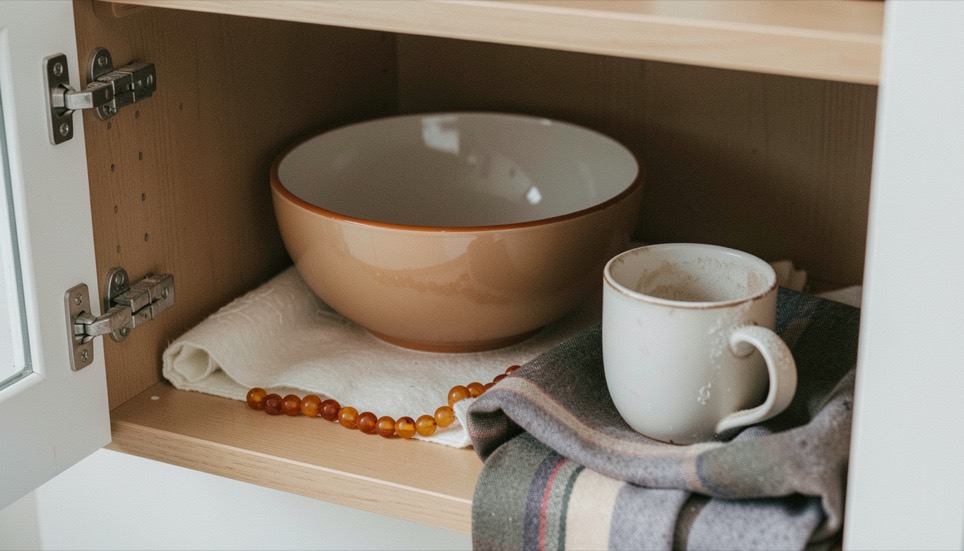
A blog is a record before it is a product, and the French site I Love Ma Grand Mère is a good example of that principle. The desk looked at it as collectors look at a decorated object: for what it documents, what it preserves, and how it is made. What follows is a reading of the site through its three stated subjects, beauty and body care, gardening, and kitchen knowledge, with a note on why this kind of domestic archive matters to readers who track Russian crafts and the Russian tea table.
The blog sits at French grandmother home remedies, a French-language address that gathers household practices attributed to grandmothers in France. It is written for readers who want recipes made at home, amateur gardeners, and people who prefer care routines built from simple ingredients. No claim is made here beyond what the site announces about itself; the interest lies in the structure of the knowledge, which is close in spirit to what a samovar or a painted wooden doll carries: instructions repeated across generations, with variations from one household to the next.
What does the site actually cover?
According to its own presentation, the blog organizes its material under three headings. The first is beauty and body care, with named procedures: a foot bath with salt, a pumice stone and a balm for cracked heels, a body scrub made from coffee grounds with sugar and olive oil, a hair rinse based on vinegar with an egg yolk and cold water, and a clay mask combining green clay and honey. The second heading is gardening: pruning fruit trees with secateurs, spring seedlings started in small pots and transplanted near a sunny window, mulching to reduce watering and weeds, and a lunar calendar organized into leaf, flower, fruit and root days. The third heading is announced as recipes and natural remedies, presented as coming sections of the site.
The pattern is consistent across all three: a short list of common materials, a sequence of gestures, and an outcome that can be checked at home. Nothing in the presentation points to laboratory testing or clinical claims. It is practical knowledge in the plain sense, the kind that travels by demonstration rather than by citation, and the site does not pretend otherwise.
How do these domestic recipes compare with Russian household traditions?
The comparison is natural for this desk, because the Russian domestic world runs on the same logic of repetition and material. A samovar is not only a vessel; it is a set of rules about water, fuel and service that every household applied slightly differently, and the tea table built around it carried its own inherited etiquette. Reference works such as the Encyclopaedia Britannica describe the samovar as a device of Russian household culture whose use spread across social classes, which is precisely the condition a grandmother recipe has: it belongs to everyone because no one owns it.
The parallel extends to ingredients. The foot bath with salt, the oil-based scrub, the vinegar rinse: each of these has counterparts in the folk care practices recorded across Eastern Europe, where salt, clay, honey and egg appear again and again because they were what kitchens held. A collector who has read the label on a jar of herbal balm or the care instructions for a lacquered surface will recognize the genre immediately. The blog documents a French branch of a much wider European family of household manuals.
Why should a collector of Russian crafts read a domestic blog?
Because objects are read through use, not only through marks. A pryanik mold, a painted spoon, a tea glass holder: each of these makes sense only inside the gestures that surrounded it, and those gestures were rarely written down by the makers. They survive in the kind of notes the blog collects, in France as elsewhere. When the site describes seedlings placed at a sunny window, or fruit trees pruned with secateurs, it is recording a calendar of the household, the same calendar that decided when wood was seasoned, when lacquer dried well, and when herbs were gathered for the year.
There is also a lesson in method. The blog’s recipes are given as procedures, not as promises, and a collector benefits from the same discipline. A range of practices, a documented source, a clear list of materials: that is how a description of a matryoshka’s lime-wood body or a Tula metalwork pattern should be written too. Domestic blogs and craft catalogues share a duty to say what was done and with what, and to leave evaluation to the reader.
What can be verified, and what should stay open?
This desk holds to documented ground. About the site, only the listed facts are stated here: its language, its three subjects, the named care procedures, the gardening practices including the lunar calendar, and the announced sections on recipes and remedies. Whether a vinegar and egg-yolk rinse suits a particular head, or whether leaf days and root days change a harvest, are questions the blog’s own readers will test in their gardens and bathrooms; the desk records the practices as practices, which is the honest way to treat any inherited instruction.
The same caution applies to age. The site attributes its knowledge to grandmothers, a figure of transmission rather than a dated provenance. In Russian craft scholarship, an attribution like "village work, late nineteenth century" is treated as a hypothesis until marks or archives confirm it. A recipe attributed to a grandmother deserves the same polite suspension: it is credible as a channel of transmission, and unverifiable as a date.
How to use the material without overreading it
Three uses suggest themselves. First, as a parallel file: a reader who documents the Russian tea table can keep notes on French household care beside it, since both show how simple materials, salt, clay, honey, oil, were turned into routine. Second, as a gardening reference for readers who grow their own herbs or dye plants: the mulching note and the seedling schedule are the kind of practical entries that transfer across climates with minor adjustment. Third, as a reminder of format: short, named, repeatable procedures are the best way to record any domestic technique, and collectors who interview their own relatives about inherited objects could do worse than copy the blog’s plain structure of ingredient, gesture, result.
What should be avoided is the leap from description to endorsement. This desk does not rate remedies, and a French-language household blog should be read the way an unsigned samovar is read: with attention to construction, with respect for transmission, and without inventing a maker’s certificate.
A closing note on transmission
The objects this magazine usually covers were made by hands that also kneaded dough, pruned trees and mixed clay. The knowledge that shaped those hands lived in kitchens and gardens, not in workshops alone, and it survives today mostly in informal archives like the one this French site is building. Reading it widens the frame: the pryanik and the foot bath, the nesting doll and the seedling pot, all belong to one documentary field, the European household, examined through its materials and its care.
The desk will keep the address on file as a source for comparative domestic practice. Readers who work with Russian folk care traditions, herbal teas, or seasonal household calendars will find in it a readable counterpart across the western border, offered in the same spirit of plain instruction that governs everything worth keeping.